
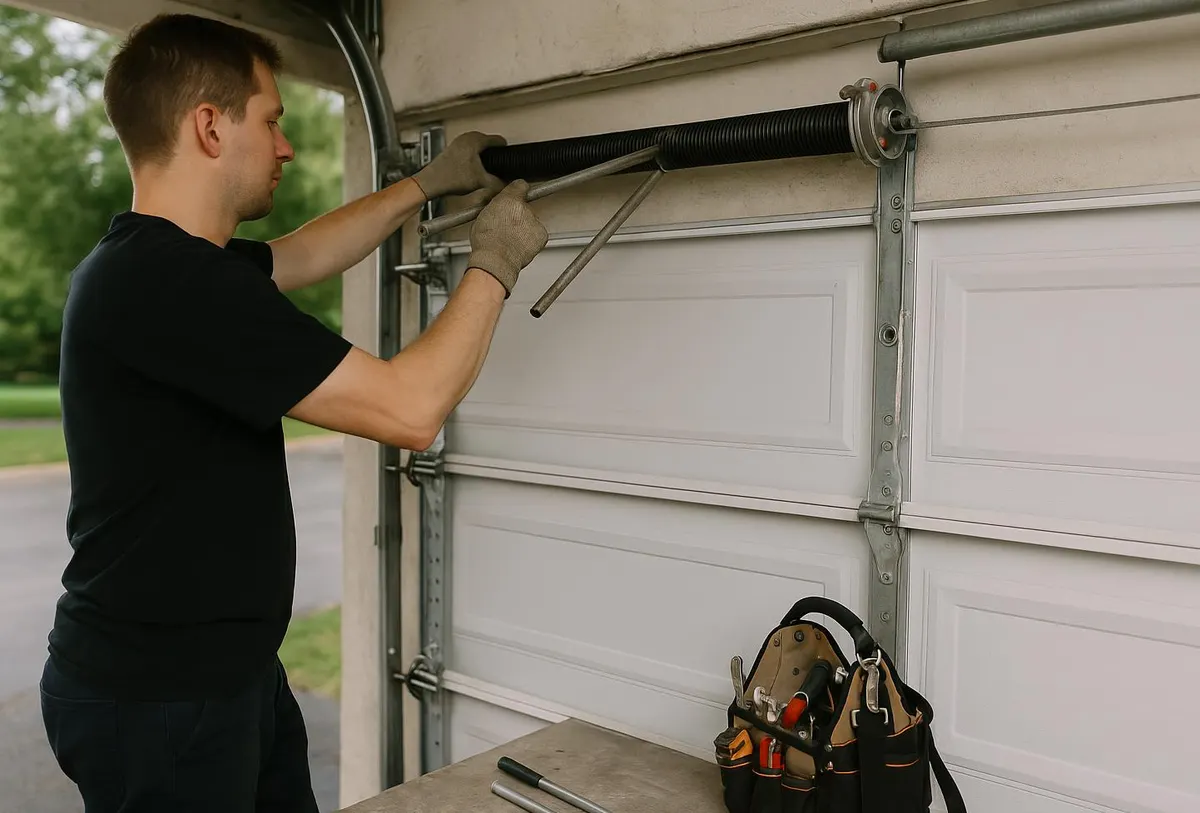
What a technician actually sees on these calls
A typical service call starts the same way: one spouse wants the door replaced, the other thinks it's "just a little rust" and fine to ignore. The technician shows up, looks at the bottom corners of the panels, runs a hand along the track, and usually finds both people are partly right. There's cosmetic surface rust that's been there for a year and done nothing, and there's a soft, swollen spot near the bottom panel that's actually structural and getting worse every time it rains. The trick is telling the two apart before it turns into an argument — or a bigger repair bill.
Why this happens so much near the Everglades coast
Garage doors here deal with a rough combination: constant humidity, salt-laden air blowing in off the coast, and heavy afternoon downpours for several months a year. Add hurricane season, when doors get soaked, dried, soaked again, and sometimes flexed by wind load, and you've got ideal conditions for two separate problems: rust on metal hardware and swelling on composite or wood-composite panels. They're not the same issue, even though they often show up together.
Rust: mostly a hardware problem
Rust forms where moisture sits on metal — hinges, rollers, the bottom bracket, screw heads, and the track itself. Signs to look for:
- Orange or reddish streaks running down from hardware onto the panel
- A rough, flaky texture on hinges or the bottom seal retainer
- Grinding or squealing when the door moves, caused by rust buildup inside rollers or the track
- Small rust spots on steel panels where the paint has chipped and bare metal is exposed
Most of this is manageable. Light surface rust on hardware can be wire-brushed, treated, and repainted. Rust that's eaten into the metal of a spring, cable, or track is a different story — that's a safety issue, not a cosmetic one, because corroded metal under tension can snap.
Swelling: mostly a panel problem
Swelling shows up differently. It's almost always at the bottom of the door, where water collects after storms, or along panel seams where moisture gets trapped between layers. Signs include:
- A bottom panel that looks slightly thicker or bulged compared to the rest of the door
- Paint cracking or bubbling along a seam
- The door binding or dragging in the track on one side, even though nothing looks obviously broken
- A soft spot you can press in slightly with a thumb — a strong sign water has gotten into the panel core
Swelling doesn't reverse itself. Once a panel has absorbed enough moisture to warp, drying it out won't bring it back to its original shape, and painting over it just hides the problem for a while.
How to tell which one you're dealing with
- Touch test: Press firmly on any discolored area. Hardware rust feels hard and rough. A swollen panel feels slightly spongy or uneven.
- Movement test: Open and close the door slowly. Grinding or resistance usually points to rusted rollers, hinges, or track hardware — not the panel itself.
- Look at where it's happening: Rust clusters around metal parts. Swelling clusters at the bottom edge or along seams, especially on the side that gets the most rain runoff or afternoon sun.
If it's rust on hardware, that's a maintenance item — not urgent, but worth doing before it spreads to the springs or cables. If it's a swollen panel, that's a replacement conversation, because the damage only gets worse with the next round of storms.
What this means for repair vs. replace
As a rough, nationally-sourced reference point, replacing a single damaged panel typically runs in the low-to-mid hundreds of dollars range, while swapping the whole door runs well into four figures — so catching swelling early, before it spreads to neighboring panels, usually saves real money. Rusted hardware is cheaper still: hinges, rollers, and track sections are inexpensive compared to a full spring or cable replacement, which is why catching rust before it reaches those parts matters.
When to call Chokoloskee Garage Door Repair
If you're seeing a soft or bulging bottom panel, call before the next storm — Garage Door Panel Replacement is faster and cheaper when it's one panel instead of three. If the issue is grinding, squealing, or visible rust on hinges and rollers, that's a job for routine Preventive Maintenance, which catches corrosion before it reaches the springs or cables. And if a cable looks frayed or rusted anywhere along its length, don't test it yourself — Garage Door Cable Repair is quick work for a technician and genuinely dangerous to attempt otherwise.
If you and your spouse can't agree on whether it's a quick fix or a real problem, send a photo or give us a call — we'll tell you straight which one it is. Reach Chokoloskee Garage Door Repair today and get it settled before hurricane season makes the decision for you.