
The Mistake: Trusting Auto-Reverse to Do All the Work
Most parents' first mistake isn't obvious neglect — it's over-trust. Modern garage doors have a photo-eye safety sensor and an auto-reverse mechanism, so it's tempting to assume the door will always stop itself if a child, a dog, or a toy gets in the way. That assumption is exactly what makes it dangerous. The sensors only work if they're clean, aligned, and powered correctly. In a humid coastal environment like the Everglades coast, that's not a given.
What Actually Goes Wrong
When a garage door safety system fails, it usually isn't dramatic right up until it is. A few common failure points:
- Misaligned photo-eye sensors. The small sensors mounted a few inches off the floor on either side of the track can shift out of alignment when a wood or metal door frame swells from humidity, or when the bracket loosens from vibration. A door that's slightly out of alignment may still close most of the time — until the one time it doesn't stop for a toddler or a cat crossing the threshold.
- Dirty or corroded sensor lenses. Salt air and afternoon storm humidity leave a film on sensor lenses faster than in drier climates. A dirty lens can cause the door to refuse to close at all, or worse, intermittently fail to detect an obstruction.
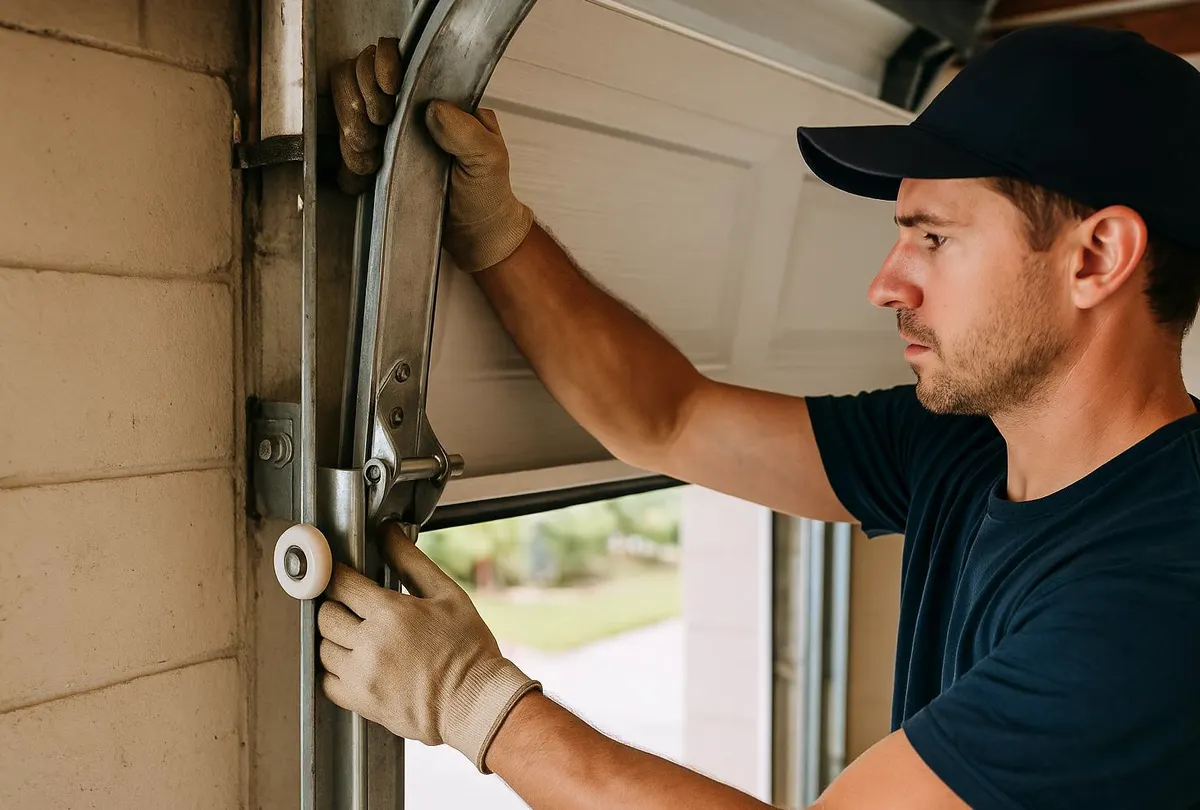
- Pinch points on panel sections. Older doors, especially ones with traditional raised panels, have gaps between sections that close small fingers can slip into as the door moves. This is one of the most common injuries for young children — not getting hit by the door, but getting fingers pinched between sections.
- Spring and cable failure. A torsion spring under tension or a frayed cable can snap suddenly, causing the door to drop fast or lurch unevenly. If a child or pet is underneath or nearby when that happens, the result can be serious.
- Remote controls within reach. Kids treat garage door remotes like any other button-covered toy. A remote clipped to a visor at kid height, or a wall button mounted low and uncovered, turns a child's curiosity into an unsupervised operating hazard.
The Specific Actions That Prevent It
Test the Safety Reverse Monthly
Place a roll of paper towels, a 2x4, or a similarly sturdy object in the door's path and close it. The door should reverse immediately on contact. If it doesn't, stop using the opener until it's repaired — this is not a wait-and-see issue.
Check and Clean the Photo-Eye Sensors
Wipe both sensor lenses with a soft cloth monthly, more often if you're near the water where salt film builds up quickly. Confirm both sensors have a steady light — a blinking or unlit LED usually means misalignment, which is common after a door frame shifts from moisture swelling.
Move Controls Out of Reach
Mount wall-button controls at least five feet up, out of a toddler's reach. Keep remotes off keychains kids can access and consider a keypad entry with a code instead of a grab-and-press remote.
Inspect Panels for Pinch Points
Run a hand along the seams between panel sections while the door is open and still. If you can feel sharp gaps, consider pinch-resistant panel inserts or discuss panel replacement with a technician — this is a low-cost fix for an ongoing hazard with young kids in the house.
Keep Pets and Kids Clear During Operation
Make it a house rule: nobody walks, runs, or plays under a moving garage door, and pets stay on a leash or behind a gate while the door cycles. Auto-reverse is a backup, not a substitute for supervision.
Watch for Storm-Related Damage
After heavy wind or a power surge from an afternoon storm, test the opener's safety features again before relying on them. Surges can scramble opener circuit boards, and a door that looks fine on the outside may have a compromised safety system.
When to Call Chokoloskee Garage Door Repair
If your sensors won't stay aligned, the door reverses inconsistently, or you notice gaps or rust forming around panel seams, don't wait for it to become a household injury story. Our Preventive Maintenance service checks sensor alignment, spring tension, cable condition, and pinch points in one visit, which matters more here than in drier parts of the state because humidity and salt air accelerate wear on exactly the parts that keep kids and pets safe. If a door has already come off track or a panel is damaged, our Off Track Door Repair and Garage Door Panel Replacement services get it back to safe, reliable operation.
If something feels off with your garage door's safety behavior, call Chokoloskee Garage Door Repair today — we serve Chokoloskee, Everglades City, Ochopee, Goodland, Marco Island, Copeland, Jerome, and Naples, and we'll make sure your door is actually as safe as it looks.