
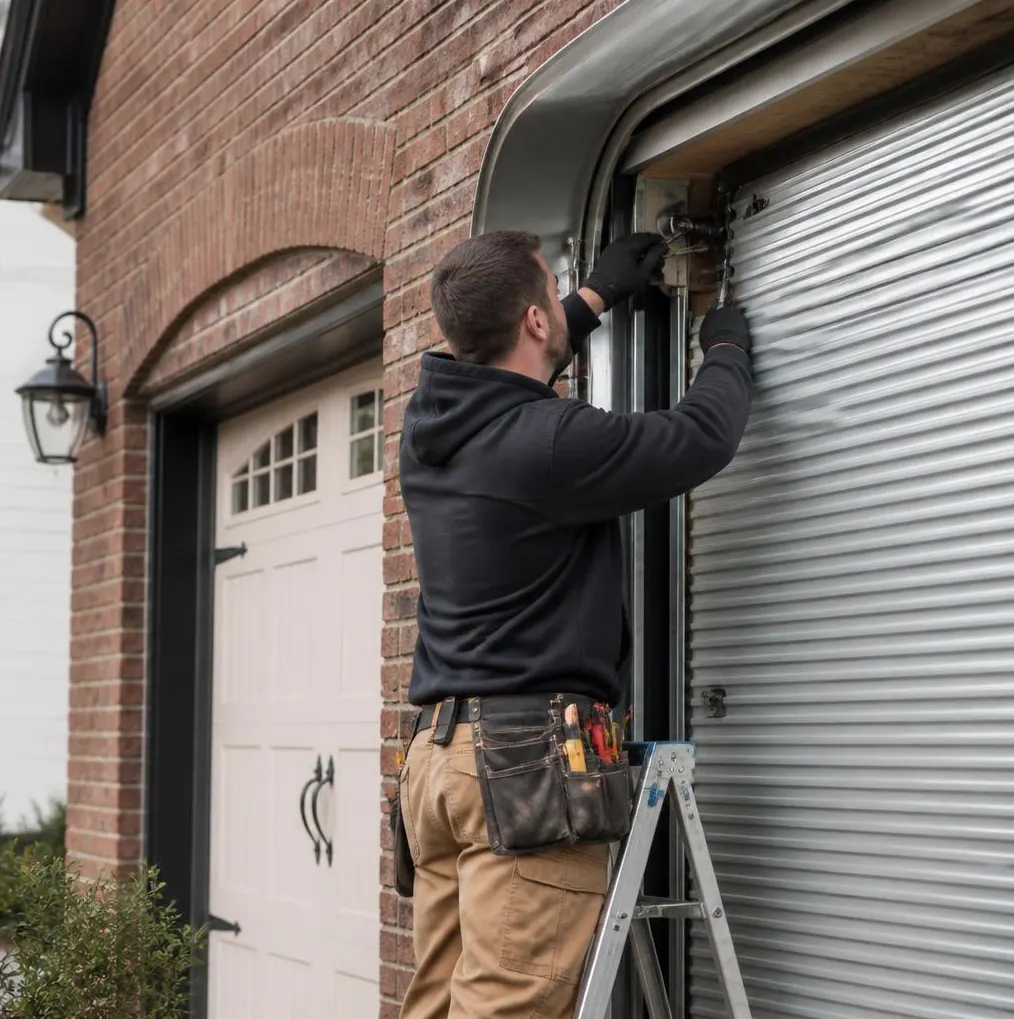
You hit the opener button on a cooler November morning, and instead of the usual smooth roll, you get a groan, a hitch halfway up, and a grinding noise that wasn't there back in June. Maybe the door looks a little crooked in its tracks. Maybe there's a reddish-brown streak running down from one of the hinges. Nothing dramatic happened — no storm, no accident — but months of Everglades coast summer have quietly worked on your garage door, and now it's letting you know.
This is the moment most homeowners here start thinking about garage door maintenance, and honestly, it's good timing. The stretch after hurricane season is the best window of the year to get a garage door back into shape before the next round of heat, humidity, and storms rolls back in.
Why This Time of Year Matters Here
Through the summer and into fall, garage doors on the Everglades coast take a beating that isn't always obvious day to day. Afternoon downpours soak the bottom seal and lower panels. Salt air off the coast works on exposed metal — tracks, hinges, springs, bolts — faster than it would inland. Humidity swings cause wood and composite panels to swell, then shrink as things dry out, which loosens hardware and throws doors slightly out of alignment.
Now that the weather is turning drier and cooler, you've got a stretch of calmer days to actually inspect and fix things instead of just reacting to them. It's also the lull before the next hurricane season starts building again, which makes it the right time to make sure your door can handle wind load the way it's supposed to.
Start With a Walk-Around Inspection
Before you touch anything, open the door manually (disconnect the opener first) and look it over slowly.
- Tracks: Check for rust, dents, or spots where the track has pulled away from the wall. Salt air corrosion often starts at the bottom few feet, closest to ground moisture and splash-back from rain.
- Springs: Look for gaps in the coils, flat spots, or visible rust. Springs under tension are not something to adjust yourself — if something looks off, that's a call-a-pro situation, not a DIY one.
- Cables: Frayed strands or rust on the cables near the bottom brackets is a sign they're wearing out and could fail without warning.
- Weatherstripping: Check the rubber seal along the bottom and sides. Months of sun and heat crack and harden rubber, which lets water and bugs in during the next heavy rain.
- Panels: Press gently on any spots that look swollen, bubbled, or soft. Moisture trapped in a panel over the summer doesn't always show up until it's already causing structural weakness.
Listen to the Opener
Run the door through a full open-and-close cycle and pay attention to sound. A healthy opener runs at a steady pace with a consistent motor hum. Grinding, stuttering, or a motor that strains harder than it used to are signs that gears are wearing down or that humidity has gotten into the electronics over the summer. Sensors near the bottom of the tracks are also worth wiping down — dust, pollen, and moisture film can make them misread and cause the door to reverse or refuse to close.
Take Advantage of the Dry Season
Drier air and cooler temperatures make this the easiest time of year to do upkeep that actually sticks.
- Lubricate moving parts. Use a silicone-based lubricant (not household oil, which attracts grit) on rollers, hinges, and the track. Do this now, and it'll hold up better through the next humid stretch than if you wait until summer.
- Tighten hardware. Bolts and brackets loosen as panels expand and contract with moisture. A quarter-turn with a wrench on visible hardware can stop a rattle before it becomes a bigger misalignment issue.
- Clean and treat rust spots early. A wire brush and a rust-inhibiting primer on small spots now is a lot cheaper than replacing a corroded track or hinge later. This matters more near Chokoloskee and the coast than it does further inland, simply because salt air speeds up corrosion that fresh water alone wouldn't cause.
- Replace cracked weatherstripping. It's a simple fix, and doing it in dry, mild weather means the new seal sets properly instead of fighting humidity while it cures.
- Check the auto-reverse safety feature. Place a block of wood in the door's path and make sure it reverses on contact. This is a basic safety check that's easy to skip but important to confirm at least once a year.
When It's More Than a Tune-Up
Some issues go beyond what a homeowner should tackle solo. If the door is noticeably off track, if a cable looks frayed or a spring looks stretched or cracked, or if the door feels unusually heavy or uneven when you lift it manually, it's time to call Chokoloskee Garage Door Repair. We handle off track door repair and garage door cable repair regularly in this area, and both are common after a summer of heat, humidity, and heavy use. We'll also check spring tension and opener function as part of the visit, since those systems work together — a door that's slightly off track puts extra strain on the springs and opener motor, which shortens their life if it's left alone.
If you're not sure whether what you're seeing is normal wear or something that needs attention, it costs nothing to ask. We serve Chokoloskee, Everglades City, Ochopee, Goodland, Marco Island, Copeland, Jerome, and Naples, and we'd rather look at it now, while the weather's easy to work in, than get a call in the middle of the next storm season. Give Chokoloskee Garage Door Repair a call and get your door checked out before winter settles in.